Do you need a financial coach in Switzerland? Most expats do not need someone to manage their money. They need education to manage it themselves. Fee-only coaching costs CHF 150 to 400 per hour and can deliver 10x to 20x ROI through tax savings and fee reductions. Over 95% of Swiss financial advice is commission-based, so always verify how your advisor gets paid before engaging.
Should you hire a financial coach in Switzerland? After a decade in private banking as a journalist and also worked at firms like JPMorgan, I have seen both sides of the industry. I have watched wealth managers charge CHF 30,000 per year to manage CHF 1 million while delivering mediocre returns. I have also seen brilliant expats paralyzed by Swiss complexity, leaving CHF 100,000 sitting in a 0.2% savings account because they did not know where to start.
Here is my honest take: most people in Switzerland do not need a financial advisor who manages their money. What they need is someone to teach them how to do it themselves. That is exactly why I left corporate to teach and empower, and eventually build VISION Investment Academy. Not to manage your money, but to give you the knowledge and confidence to manage it yourself.
In this guide, I will walk you through the Swiss financial advice landscape, help you decide whether you actually need professional help, and show you how to avoid the expensive mistakes that cost expats thousands every year.
What Is a Financial Coach (and How Is It Different From an Advisor)?
The terminology in Switzerland is confusing. Let me break it down clearly.
A financial advisor (Finanzberater) typically manages your money directly. They have discretionary authority over your portfolio, make investment decisions on your behalf, or give you specific advice, such as buy this, sell that, and often earn commissions on the products they sell you. Under FinSA and FinIA regulations, portfolio managers must be licensed by FINMA.
A financial coach (Finanzcoach) takes a different approach. We educate. We teach you to understand the Swiss system, evaluate your options, and make your own decisions. Coaching falls outside FINMA regulation as long as we do not recommend specific securities or manage your assets. So most financial coaches are independent.
The key difference? After working with an advisor, you remain dependent on them. After working with a coach, you can fly on your own.
The Swiss Financial Advice Landscape in 2026
When you search for financial help in Switzerland, you will encounter several distinct categories. Understanding them helps you avoid expensive mistakes.
Boutique Fee-Only Advisors
These firms charge transparent hourly rates or flat fees with no commissions. Examples include VZ VermögensZentrum (Switzerland’s largest independent advisor with over 1,800 staff), Deloris AG (CHF 350 per hour, expat-focused), and smaller independents like Finanzdepot. Expect to pay CHF 150 to 500 per hour depending on complexity.
Expat-Focused IFAs
International Financial Advisors serving expats include firms like Blackden Financial (Geneva, FINMA-licensed), ANTA Advisory, and others. Quality varies enormously. Some are genuine fee-only fiduciaries. Others mix fees with product commissions. Always ask how they get paid.
US Cross-Border Specialists
Americans in Switzerland face unique tax nightmares. Firms like SAWA (Swiss American Wealth Advisors) or White Lighthouse specialize in this space. Pricing is premium: SAWA charges USD 2,950 to 4,975 for workshop sessions, and ongoing advisory starts around USD 20,000 per year. Expensive, but often necessary given PFIC rules especially for those high net worth individuals.
Free Educational Resources
Switzerland has excellent free content. The Poor Swiss (Baptiste Wicht), Mustachian Post (Marc Pittet), arvy.ch (Patrick Rissi, CFA), and moneyland.ch provide solid foundational knowledge. My own YouTube channel, which has become Switzerland’s largest English-speaking personal finance channel, offers over 100 free videos on everything from ETFs to the Swiss pension system: https://www.youtube.com/@CharleneCong
Commission-Based “International Advisors” (The Danger Zone)
This is where most expats get burned. These firms, often with impressive-sounding names and slick offices, earn their money selling high-fee products. They push life insurance wrapped around Pillar 3a, actively managed funds with 1-2% annual fees, and complex structured products you do not need.
Warning: Over 95% of financial advice in Switzerland remains commission-based. The person sitting across from you may call themselves an advisor, but their real job is selling products. Their income depends on you buying what they recommend.
Do You Actually Need a Financial Coach?
Here is my honest assessment. Not everyone needs paid help. But certain situations genuinely benefit from professional guidance.
You Probably Need Professional Help If:
| Situation | Why Professional Help Matters |
|---|---|
| You are a US citizen | PFIC rules, FATCA, Form 8621. Standard Swiss strategies can trigger 40%+ tax rates on phantom gains. This is not DIY territory. |
| You are within 10 years of retirement | Pillar 2 decisions, withdrawal staggering, and early retirement planning involve irreversible choices worth tens of thousands of CHF. |
| You are going through divorce | Swiss law requires mandatory Pillar 2 splitting. Mistakes here are permanent. |
| You have over CHF 1 million investable | Optimization opportunities (tax-loss harvesting, multi-canton strategies, estate planning) justify professional fees. |
| Complex equity compensation | RSUs, ISOs, and stock options from US employers create multi-jurisdiction tax headaches. |
You Can Probably DIY If:
- You have Switzerland-only income and tax situation
- Your salary is under CHF 200,000 and net worth under CHF 1 million
- You have no US passport or complex cross-border ties
- You can invest 6 to 20 hours in financial education
- You are comfortable executing trades through an online broker
Not sure which path applies to you? This decision tree can help:
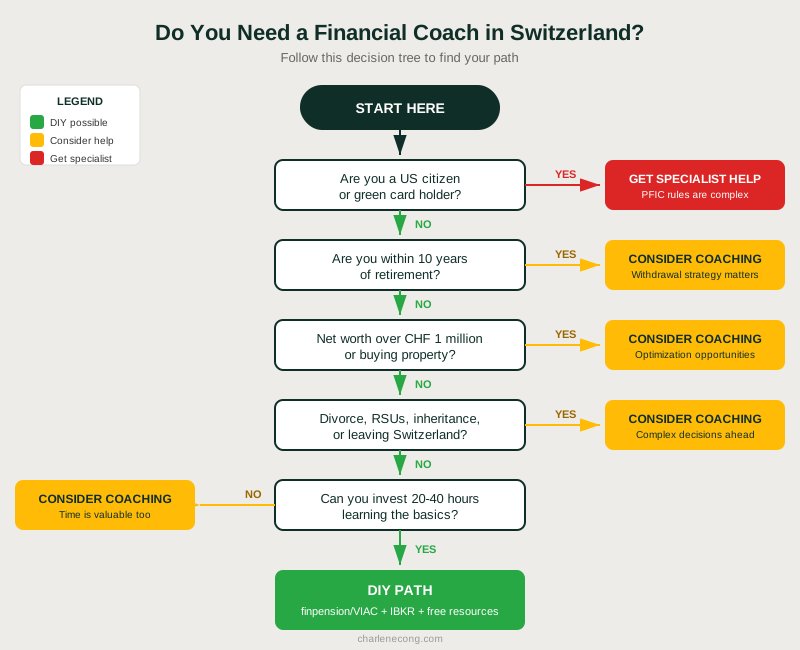
For the DIY path, my recommended toolkit: finpension or VIAC for Pillar 3a, Interactive Brokers or Swissquote or Saxo for taxable investing, and educational resources from The Poor Swiss, Mustachian Post, and my free investment training.
The Real Cost of Bad Advice (And the ROI of Good Coaching)
Let me show you the math that most advisors do not want you to see.
What Bad Advice Costs
The typical commission-based model in Switzerland involves roughly 2.5% total annual fees: 1.5% management fee plus 1% embedded product costs. On a CHF 500,000 portfolio, that is CHF 12,500 per year disappearing into fees.
Over 20 years, assuming 7% market returns, that fee drag costs you approximately CHF 400,000 in lost wealth. Not a typo. The power of compounding works against you when fees compound too.
Even worse: 3a life insurance products. One documented case from La Mobilière showed only 90.7% of premiums actually getting invested. The rest went to administration (2.9%), commissions (2.7%), and other costs (3.6%). Another analysis of Swiss Life Select found clients losing roughly 2% annually to fees.
What Good Coaching Returns
If you get yourself educated. Here is what that investment can return:
| Insight Gained | First-Year Value |
|---|---|
| Pillar 3a maxed (CHF 7,258 at 30% marginal rate) | CHF 2,177 tax savings |
| Switch from bank 3a (1.5% TER) to finpension (0.39%) | CHF 2,220 saved on CHF 200k |
| Cancel 3a life insurance policy | CHF 3,000+ NPV improvement |
| Pillar 2 buy-in timing strategy | CHF 5,000+ tax optimization |
| Withdrawal staggering for retirement | CHF 21,000+ on CHF 650k (Zurich) |
That CHF 2,000 coaching fee can easily deliver 10x to 20x returns in the first year alone. And unlike ongoing advisory fees, it is a one-time investment in your own knowledge.
Six Red Flags When Evaluating Financial Help
After a decade watching how the industry operates, these are the warning signs I tell everyone to watch for:
- Commission-only compensation. If they only get paid when you buy something, their incentives are misaligned with yours.
- Pushing 3a or 3b life insurance. These products benefit the seller, not you. As one Swiss finance blogger put it, these sales practices are “at the limit of legality.”
- Cold calling. Legitimate advisors do not cold call. Firms like Swiss Life Select and “international pension transfer” companies targeting expats are notorious for this.
- Guaranteed return claims. This is literally illegal under FinSA. Any advisor making such claims is either ignorant or dishonest.
- No registration in the FinSA adviser register. Check regservices.ch or arif.ch. If they provide investment advice, they should be registered.
- No written fee schedule. If they cannot clearly explain how they get paid in writing, walk away. Same goes for pressure to sign immediately.
Twelve Questions to Vet Any Financial Professional
Before engaging anyone, ask these questions. Their answers tell you everything you need to know.
- How are you compensated? Fee-only, commission, or hybrid? Get specifics.
- Will you sign a fiduciary acknowledgment? This creates legal obligation to act in your interest.
- What is your FinSA register number? Verify at regservices.ch.
- Do you speak my language fluently? Financial nuances matter. Broken communication leads to broken advice.
- Do you have experience with my home country’s tax system? Critical for cross-border situations.
- Can you provide three client references in similar situations? Real track record matters.
- What is your minimum engagement size? Ensures you are in their target client range.
- Will all recommendations be provided in writing? Verbal advice disappears when things go wrong.
- Are you affiliated with an ombudsman? Required under FinSA for dispute resolution.
- Do you carry professional indemnity insurance? Protects you if they make costly errors.
- What is my all-in annual cost in CHF? Not percentages. Actual francs leaving your pocket.
- What is your view on 3a life insurance? This is a calibration question. If they are positive about these products, they are either uninformed or conflicted.
Why I Built VISION Academy Instead of Becoming an Advisor
People often ask why I do not just manage money for clients. The pay would certainly be higher.
Here is my honest answer: after ten years making rich people richer at firms like JPMorgan, I started questioning the meaning behind my work. I realized that what most people need is not another person managing their money. They need the knowledge and confidence to do it themselves.
“Money is not the goal itself. We do not advocate chasing money for money’s sake. We see money as a powerful tool for freedom, choices, and the power to say no.”
From my interview with Persuasive Discourse, March 2026
The financial industry has a dirty secret: complexity is profitable. The more confused you are, the more you depend on professionals who charge ongoing fees. My mission is the opposite. I want to make you independent.
Our VISION Investment Academy is not a money management service. It is education. In less than 6 hours of self-paced learning, you get a clear framework for evaluating your finances, understanding investment options, and building your own strategy. The monthly coaching calls answer your specific questions. But the goal is always the same: teach you to fish, not fish for you.
The DIY Path: A Realistic Assessment
Can you really manage your own finances in Switzerland without professional help? For most expats, yes. Here is what the path looks like.
The Foundation (Month 1)
Open a Pillar 3a account with a low-cost provider. finpension and VIAC both charge under 0.45% TER versus over 1.2% at most banks. This single decision saves you CHF 1,500+ per year on CHF 200,000. Max out your contributions (CHF 7,258 for 2026) for immediate tax savings of CHF 1,200 to 2,800 depending on your canton and marginal rate.
Education Phase (Months 1 to 3)
Invest 6 to 20 hours learning the fundamentals. Read The Poor Swiss and Mustachian Post blogs. Watch my YouTube videos on Swiss tax treatment, ETF selection, and broker comparisons. Understand the three-pillar system thoroughly. This is the knowledge that prevents expensive mistakes.
Implementation (Month 3+)
Open a brokerage account with Interactive Brokers or Swissquote or Saxo. Start with a simple investment strategy. Set up automatic monthly investments. Ignore the news. Let time and compounding do the work.
This DIY approach is not for everyone. But for expats with straightforward situations, it is genuinely superior to paying ongoing advisory fees.
Special Considerations for US Citizens in Switzerland
If you hold a US passport, everything I have said about DIY gets more complicated. The PFIC (Passive Foreign Investment Company) rules make standard Swiss investing strategies potentially disastrous.
Any non-US fund, including ETFs inside your Swiss Pillar 3a, is classified as a PFIC. This means:
- Gains taxed at top marginal rates (37%+ federal) regardless of holding period
- Interest charges on “deferred” tax even when you have not sold
- Form 8621 required for each PFIC (IRS estimates 22 hours per form)
- Tax preparation costs of USD 500 to 1,000 per PFIC held
Your Pillar 2 employer contributions are likely immediately taxable as US income because the treaty does not classify Swiss pension plans as qualified retirement plans.
Many Swiss banks refuse US persons entirely due to FATCA compliance costs.
The standard advice for Americans: keep Pillar 3a in cash or skip it entirely. Invest through a US brokerage in US-domiciled funds. Treat Swiss Vorsorge insurance as toxic. And get specialized cross-border advice.
Credentials That Actually Matter
When evaluating financial professionals, these credentials indicate genuine expertise:
| Credential | What It Means |
|---|---|
| CFA (Chartered Financial Analyst) | Rigorous investment analysis training. Three levels of exams with 50%+ failure rates. Requires adherence to ethics code. |
| CFP (Certified Financial Planner) | Broad financial planning knowledge. In Switzerland, offered through SFPO via IfFP. |
| Finanzplaner mit eidg. Fachausweis | Swiss federal diploma in financial planning. Solid practical knowledge of Swiss system. |
| FINMA FinIA License | Required for portfolio managers. Indicates regulatory oversight. |
| SEC Registration | Required for advisors serving US persons. Critical for cross-border situations. |
Membership in professional associations like SFPO (Swiss Financial Planners Organization), IAF, or FEIFA also signals commitment to professional standards.
Not Sure Where to Start?
Join my free 90-minute investment training where I walk you through my complete framework for building wealth in Switzerland. No sales pitch. Just the same principles I used to build a seven-figure portfolio and retire at 32.
Frequently Asked Questions
How much does a financial coach cost in Switzerland?
Fee-only financial coaches in Switzerland typically charge CHF 150 to 400 per hour. Boutique firms like Deloris AG publish rates of CHF 350 per hour. Multi-session packages range from CHF 1,500 to 5,000 depending on complexity. For comparison, US cross-border specialists like SAWA charge USD 2,950 to 4,975 for workshop sessions. Always ask for a written fee schedule before engaging.
Is a financial coach regulated by FINMA?
No. “Financial coach” is not a FINMA-defined category. Coaching focused on education, budgeting, and general financial literacy falls outside FinSA and FinIA regulations. However, if a coach recommends specific securities, manages funds, or holds power of attorney over your assets, they cross into regulated territory.
What is the difference between a financial coach and a financial advisor?
A financial advisor typically manages your money directly, making investment decisions on your behalf and often earning commissions on products sold. A financial coach teaches you to understand your finances and make your own decisions. After working with an advisor, you remain dependent on them. After working with a coach, you can manage your own investments. The goal of coaching is empowerment and independence, not ongoing dependency.
Should I hire a financial advisor if I am an expat in Switzerland?
Most expats with straightforward situations (Swiss income only, no US ties, willing to invest 6 to 20 hours in education) can successfully manage their own finances using low-cost platforms like finpension, VIAC, and Interactive Brokers.
How do I know if a financial advisor in Switzerland is trustworthy?
Ask these key questions: How are they compensated? (Fee-only is best.) Will they sign a fiduciary acknowledgment? Are they registered in the FinSA adviser register? Can they provide client references? Watch for red flags: commission-only compensation, pushing 3a life insurance, cold calling, guaranteed return claims, no written fee schedule, or pressure to sign immediately. A trustworthy advisor will welcome these questions.
What credentials should a financial coach in Switzerland have?
Look for recognized credentials like CFA (Chartered Financial Analyst), CFP (Certified Financial Planner), or the Swiss Finanzplaner mit eidg. Fachausweis. For US persons, SEC registration matters. Membership in professional associations like SFPO, IAF, or FEIFA indicates commitment to professional standards. Also verify they carry professional indemnity insurance and are affiliated with an ombudsman for dispute resolution.
The Bottom Line
The financial advice industry in Switzerland is designed to create dependency. Complexity is profitable. Confusion keeps you paying ongoing fees.
My approach is different. Whether you work with me through VISION Academy or learn independently through free resources, the goal is the same: give you the knowledge and confidence to manage your own financial future.
For most expats, the DIY path is not just possible. It is superior. You save thousands in fees while building knowledge that serves you for life.
But if your situation involves US citizenship, upcoming retirement, divorce, property purchase, or seven-figure wealth, the right professional guidance pays for itself many times over. Just make sure that professional is fee-only, fiduciary, and genuinely working in your interest.
The question is not whether you can afford financial help. It is whether you can afford the wrong kind.
Disclaimer: This article is for educational purposes only and does not constitute financial, investment, tax, or legal advice. FinFit GmbH is an independent education platform and is not affiliated with any financial institutions. Consult a qualified professional for advice specific to your situation.

Charlene Cong, CFA, based in Zurich, Switzerland, is the founder of FinFit Solution and VISION Investment Academy. She is a seasoned Chartered Financial Analyst (CFA) with over a decade of experience in finance and banking across Asia and Europe.
Her career includes a notable tenure at JPMorgan and serving as an executive board member of the Swiss Capital Market Forum Association. She also has over seven years of experience as a banking journalist, where she investigated the investment strategies of high-net-worth individuals.