Swissquote vs Interactive Brokers: which is better for Swiss investors? Both platforms are safe and regulated. Interactive Brokers offers significantly lower fees, making it ideal for cost-conscious investors trading frequently or investing internationally. Swissquote costs more but provides easier tax reporting with DA-1 forms, local Swiss support, and a simpler interface for beginners. The right choice depends on whether you prioritize saving money or saving time.
If you are an expat living in Switzerland or a Swiss resident ready to start investing, you have probably heard of Swissquote and Interactive Brokers. Both are popular investment platforms. Both have strong reputations. And both can help you build wealth.
But which one is better for YOU?
I have used both platforms extensively. Interactive Brokers was my main broker when I lived in Hong Kong. When I moved to Switzerland, I switched to Swissquote. Today, I have over CHF 1 million invested through Swissquote.
Does that mean Swissquote is objectively better? No. It means Swissquote is better for me. Your situation might be completely different.
In this guide, I will break down the key differences across four areas: safety, fees, user experience, and tax reporting. By the end, you will know exactly which platform fits your needs.
1. Safety and Regulation
When you are ready to put your life savings to work, safety is the top priority. Let me address this first: both platforms are safe.
Swissquote
Swissquote is Switzerland’s largest online bank. Yes, bank. They have a full banking license, not just a broker license. They are regulated by FINMA, Switzerland’s financial regulatory authority, and have been around since 1996.
One big advantage: as a Swiss bank, Swissquote offers deposit protection up to CHF 100,000 under Swiss law through esisuisse. If something goes wrong, your cash is protected.
Interactive Brokers
Interactive Brokers is a global powerhouse. They manage over two million accounts and handle almost two million daily trades. The company is publicly traded on NASDAQ with a market cap over $50 billion.
IBKR is regulated in the US by the SEC, in the UK by the FCA, and in several other jurisdictions. For Swiss investors, you typically deal with their UK entity. Your assets are segregated from the company, meaning creditors cannot touch your money if something happens to the broker.
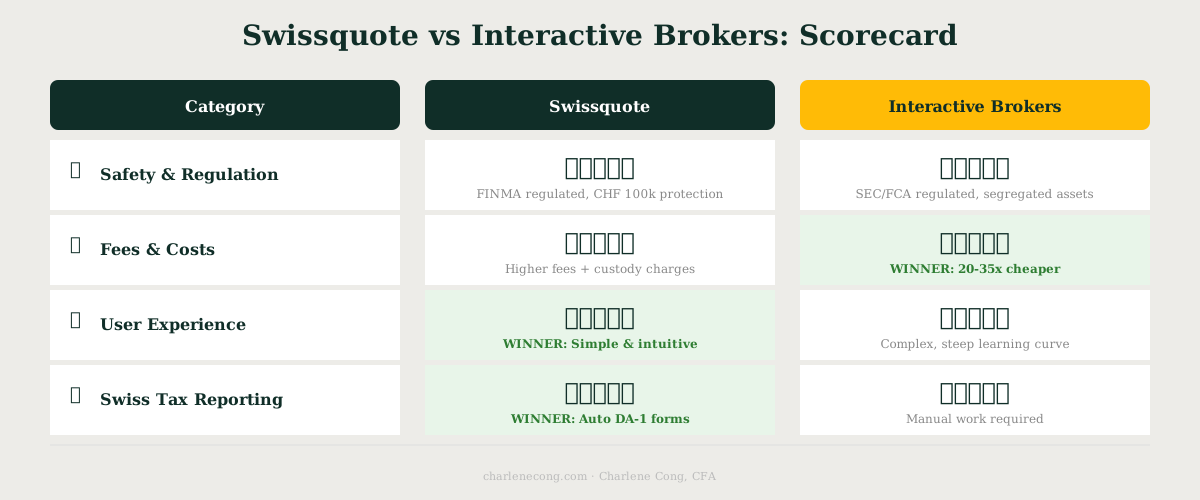
My verdict on safety: Both platforms score 5 out of 5. The main difference is that Swissquote is regulated directly in Switzerland, while Interactive Brokers has global oversight. If safety is your only concern, you are covered with either option.
2. Fees and Costs
This is where the platforms differ significantly. Let me focus on three types of fees: trading fees, custody fees, and FX fees.
Trading Fees
Swissquote: Trading fees depend on your transaction size and which stock exchange you use. For example, if you invest $5,000 in a US ETF on the New York Stock Exchange, the trading fee is around $25-30. For Swiss stocks, fees start around CHF 9 for small orders.
Interactive Brokers: IBKR offers two fee systems: fixed and tiered. The tiered system is more complex but cheaper. For Swiss stocks, you pay about 0.05% with a minimum of CHF 1.50. For US stocks, commissions can be as low as $0.35 per trade. US ETFs often have zero commission.
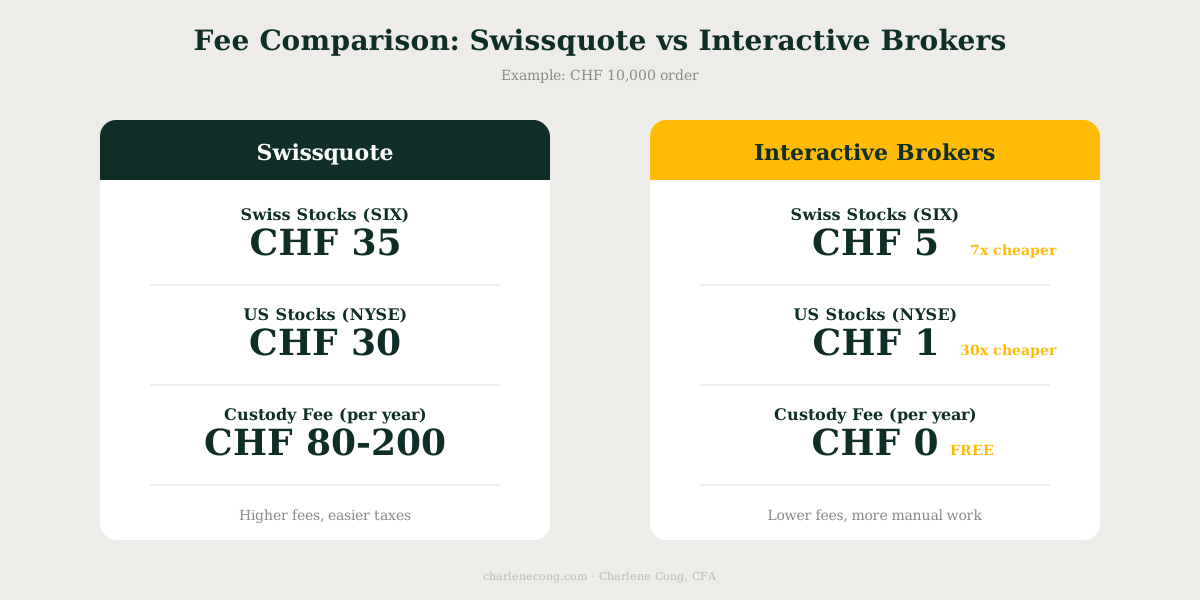
Fee Comparison Example (CHF 10,000 order)
| Market | Swissquote | Interactive Brokers |
|---|---|---|
| Swiss Stocks (SIX) | ~CHF 35 | ~CHF 5 |
| US Stocks (NYSE) | ~CHF 30 | ~CHF 1 |
| US ETFs | ~CHF 25 | CHF 0 (many are free) |
Note: Fees change over time. Always check the current fee schedule on each platform before making a decision.
Custody Fees
Swissquote: Charges quarterly custody fees. CHF 20 per quarter for assets up to CHF 50,000, increasing to CHF 50 per quarter for assets above CHF 150,000. Even if you do not trade, you pay these fees just for holding your investments.
Interactive Brokers: No custody fees for most users. This alone can save you CHF 80-200+ per year.
Currency Exchange (FX) Fees
If you need to convert CHF to USD to buy US stocks, you pay an FX fee.
Swissquote: FX spreads are relatively high, around 0.5-1% depending on the currency pair.
Interactive Brokers: FX fees are minimal, often just $2 flat for the conversion regardless of size, unless you convert millions. This makes a huge difference if you invest internationally.
My verdict on fees: Interactive Brokers wins decisively. If you are making regular trades, especially in US or international markets, IBKR will save you significant money over time. The difference can easily be CHF 500-1,000+ per year depending on your activity.
3. User Experience
This is where Swissquote fights back.
Swissquote
The platform is clean, intuitive, and available in French, German, Italian, and English. Everything feels straightforward. If you are new to investing, Swissquote will not overwhelm you.
Completely new to investing? Start with my guide on how to start investing in Switzerland before choosing a broker.
Think of Swissquote as a Swiss Army knife: it has all the essential tools you need, and it is reliable. You can buy ETFs, stocks, and funds in just a few clicks.
In terms of user experience, they offer an all-in-one service. If you live in Switzerland, you can open a Pillar 3a account with them, have debit and credit cards, and manage your investments — it’s essentially a bank.
For many people who prefer simplicity and don’t want their accounts spread across different institutions, Swissquote can be an attractive option.
Interactive Brokers
IBKR can feel overwhelming at first. The platform has a ton of tools, but many are designed for advanced traders, not regular investors. Even after 10 years in banking, I have only used about 10-20% of the features Interactive Brokers offers.
Think of Interactive Brokers as a trading supercomputer: powerful, but complicated for some beginner investors. Why complicate things when simplicity works better?

My verdict on user experience: Swissquote wins for beginners. If you want a smooth experience without unnecessary complexity, Swissquote is the better choice. If you are comfortable with technology and willing to learn, IBKR becomes easier over time.
4. Tax Reporting (This Is Huge for Expats)
This is where many comparison articles fail. They focus on fees but ignore the headache of Swiss tax reporting. For expats, this matters a lot.
Quick tax primer: In Switzerland, private investors do not pay tax on capital gains. If you buy an ETF at CHF 100 and sell it at CHF 150, the CHF 50 profit is tax-free. However, you do pay tax on dividends. Dividends are taxable income.
Swissquote
Swissquote provides a DA-1 form, which is essential for Swiss residents who need to claim back withholding tax on dividends. They automatically calculate and list everything you need for your tax return. It is all there, ready to go.
Incoming dividends, including any taxes withheld, are sent separately to your mailbox in a clearly laid out PDF. During tax season, this saves hours of work.
Interactive Brokers
IBKR provides the documents you need, but you will need to manually track your investments and calculate your taxable income. The information must be retrieved manually, and it can get complicated, especially with a more complex portfolio.
To be honest, even though I am a finance professional, I personally use a tax advisor. They are more efficient and save me time. Because time is money.
My verdict on tax reporting: Swissquote wins clearly. If you want seamless Swiss tax reporting without headaches, Swissquote is worth the higher fees.
Which Broker Is Right for You?
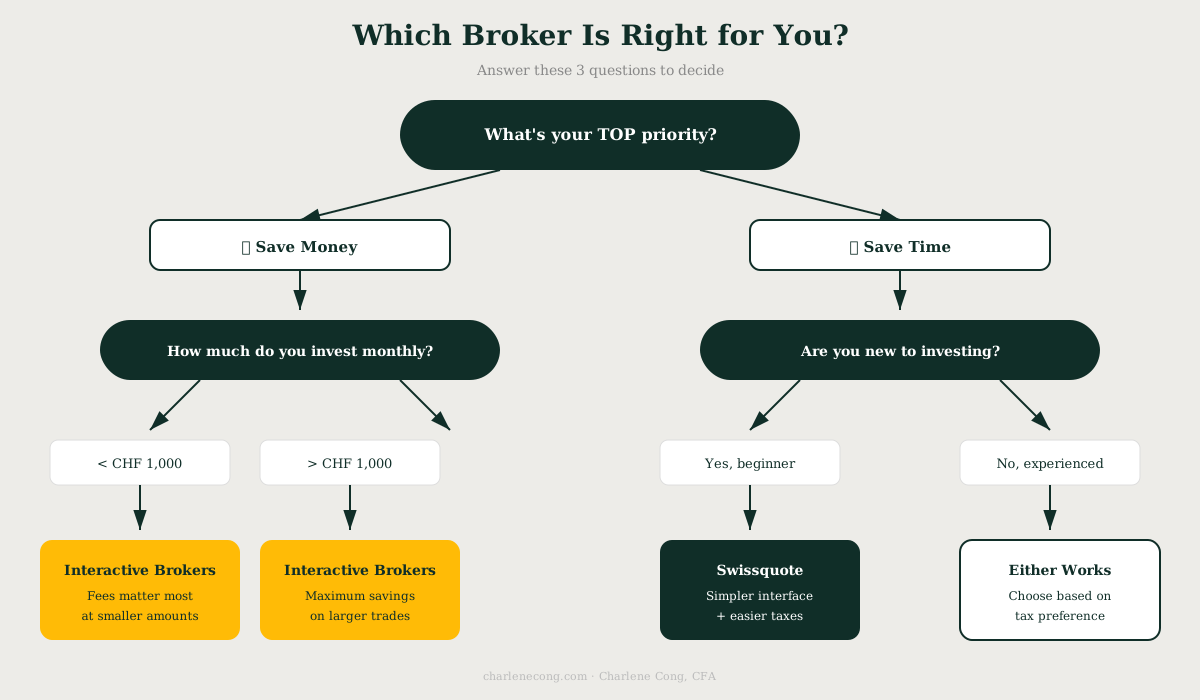
There is no single best broker. The right choice depends on your priorities.
| Choose Swissquote if… | Choose Interactive Brokers if… |
|---|---|
|
• You value simplicity over cost savings • Swiss tax reporting ease matters to you • You are a beginner investor • You prefer local Swiss support • Time is more valuable than money to you |
• Minimizing fees is your top priority • You invest frequently or in large amounts • You trade international/US markets • You are comfortable with complexity • You handle your own tax reporting |
Why I Use Swissquote (With Over CHF 1 Million)
Let me share my story. When I was living in Hong Kong, Interactive Brokers was my main broker. But when I moved to Switzerland, I started using Swissquote. Mainly because of the tax reporting benefits and the accessibility of their services here.
Swissquote’s team is in the same time zone. Their live chat is well-run, and you always get a real human answering your questions. Once your capital reaches a certain level, you get a dedicated contact person. Whenever I have an issue, I can simply call or email my contact, and he is always there to help.
Yes, Swissquote fees are higher. But if those higher fees come with better service and time-saving features, then for me, it is worth it.
However, I also get that if you are starting small, let us say investing CHF 500 per month, Swissquote’s fees might feel too high. If you are investing CHF 500 and paying CHF 5 in fees, that is already a 1% transaction fee gone. In that case, Interactive Brokers might make more sense.
The bottom line: It depends on how much you invest, where you invest (Swiss stocks vs. US/international ETFs), and how important time-saving and service are to you.
Once you’ve chosen your broker, the next step is deciding where to put your money. See my guide to the best investments in Switzerland for a complete overview.
FAQ: Swissquote vs Interactive Brokers
Is Swissquote or Interactive Brokers safer?
Both are safe and reliable. Swissquote is regulated by FINMA in Switzerland with deposit protection up to CHF 100,000. Interactive Brokers is regulated by the SEC, FCA, and other authorities globally. Your assets are segregated from the company in both cases.
Which is cheaper for buying US ETFs?
Interactive Brokers, by far. Many US ETFs can be purchased with zero commission on IBKR. Swissquote charges around CHF 25-30 per trade for US markets.
Can I use both brokers?
Yes. Some investors use Swissquote for Swiss investments and tax simplicity, while using Interactive Brokers for international investments where fees matter more. However, I recommend keeping things simple. Managing multiple accounts adds complexity to your tax reporting.
Does Interactive Brokers work for Swiss taxes?
Yes, but you will need to do more manual work. IBKR provides the necessary documents, but they are not formatted specifically for Swiss tax authorities like Swissquote’s DA-1 forms. Many IBKR users in Switzerland hire a tax advisor or use tax software.
What about Saxo Bank or other alternatives?
Saxo Bank has improved significantly and now offers competitive fees with free tax statements from 2025. It sits between Swissquote and Interactive Brokers in terms of pricing.
Your Next Step
Choosing a broker is just the first step. The platform you use is a tool. What matters far more is your investment strategy.
If you want help creating your investment strategy, I run a free 90-minute live masterclass where I teach you how to invest with clarity and confidence. No finance background needed.
The Broker Is Just a Tool. Your Strategy Is What Matters.
Whether you choose Swissquote or Interactive Brokers, the platform won’t make you wealthy, your investment strategy will. Join my free 90-minute live masterclass where I share the exact framework I used to build a 7-figure portfolio and retire at 32.

Charlene Cong, CFA, based in Zurich, Switzerland, is the founder of FinFit Solution and VISION Investment Academy. She is a seasoned Chartered Financial Analyst (CFA) with over a decade of experience in finance and banking across Asia and Europe.
Her career includes a notable tenure at JPMorgan and serving as an executive board member of the Swiss Capital Market Forum Association. She also has over seven years of experience as a banking journalist, where she investigated the investment strategies of high-net-worth individuals.