To start investing in Switzerland, first build your financial foundation: create a budget, establish a 3-6 month emergency fund, and pay off high-interest debt. Then follow the VISION framework: define your goals, explore investment options in Switzerland (ETFs, stocks, bonds), build a personalized strategy, open a Swiss broker account (Swissquote, Interactive Brokers, or Yuh), automate monthly investments, and optimize for fees and Pillar 3a tax benefits.
Key Takeaways
- Before investing money in Switzerland: Build a budget, emergency fund (3-6 months), and pay off debt above 6-7%
- You don’t need a finance degree, I built a 7-figure portfolio starting with just $500
- Make investing as automatic as brushing your teeth, just 2 trades per month
- Swiss investors can save thousands yearly through Pillar 3a tax optimization
- Your first investment in Switzerland can be as simple as one ETF, that’s a game changer
You’re thinking about investing money in Switzerland, but the system feels confusing, overwhelming, maybe even intimidating.
I get it. I’ve been exactly where you are.
And let me be real with you: those pushing you to invest might have a hidden agenda, like earning commissions or advisory fees off your hard-earned cash. Before you dive in, we need to have an honest conversation about what it actually takes to learn investing in Switzerland the right way.
When I made my first investment (just $500 into an ETF during my final year of university), I had no finance background. My degrees are in Chinese Literature and Journalism. I didn’t come from money. I grew up in a small village in northeastern China where “investing” wasn’t even part of our vocabulary.
Fast forward to today: I’m a CFA charterholder, I’ve worked at JPMorgan Asset Management and Avaloq, and most importantly, I retired at 32 with a 7-figure portfolio Not because I got lucky with crypto or inherited wealth, but because I followed a systematic approach that anyone can learn.
In this guide, I’ll walk you through all the investment options in Switzerland, share the exact framework I used, and help you make your first investment in Switzerland with confidence. But first, let’s cover the three things you absolutely must do before you invest a single franc.
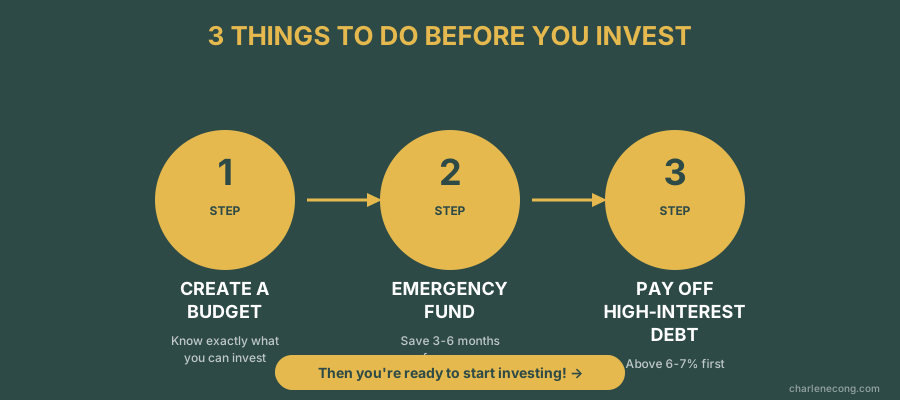
3 Things You Must Do Before Investing Money in Switzerland
I see this all the time: people rush into investing because everyone’s talking about it. Their colleague made money on Tesla. Their neighbor’s into crypto. The pressure is real.
But here’s what nobody tells you: investing without a financial foundation is like building a house on sand It might look good for a while, but one storm and everything collapses.
Prerequisite #1: Create a Budget
Before you start investing money in Switzerland, you need a crystal-clear picture of your financial situation.
Here’s a scenario I see constantly: You’ve got CHF 500 to invest this month. But then, bam. Your car needs fixing, costing CHF 300. If you don’t have a budget, you might put that CHF 500 into investments without realizing you’re short on cash for actual living expenses.
With a budget, you see the big picture. You know you’ve got CHF 200 left after fixing the car, so you can safely invest that. It’s your financial safety net.
Action step: Track your income and expenses for one month: rent, utilities, groceries, debt payments, everything. This tells you exactly how much you can actually invest each month without putting yourself at risk.
Prerequisite #2: Build an Emergency Fund
An emergency fund is a financial cushion designed to cover unexpected expenses like a doctor’s visit not covered by insurance, a sudden job loss, or a family emergency.
Why is this crucial before investing? Because life loves to throw curveballs.
Imagine this: You’ve put all your extra cash into the stock market because you’re eager to see it grow. Suddenly, you lose your job, or a big medical expense pops up. Without an emergency fund, you’re stuck. You might have to sell your investments at a bad time, potentially at a loss, or rack up credit card debt to cover costs.
How much do you need? Aim for 3-6 months of living expenses. If you have a stable job, 3 months might be enough. If your income is variable or you feel less secure, go for 5-6 months.
Where to keep it? In a high-yield savings account with high liquidity, meaning you can access it immediately when you need it. Don’t lock it in a product that says “sorry, you can only get this money in two months.” In my view, liquidity is way more important than the interest rate here.
And remember: Your emergency fund is sacred. Don’t dip into it for a nice restaurant or a spontaneous shopping trip. It’s for true emergencies only.
Prerequisite #3: Pay Off High-Interest Debt
This is the step most people skip, and it’s often the most important one.
Before you dive into investing, you need to tackle any high-interest debt: credit cards, personal loans, anything with interest rates higher than 6-7%
Why 6-7%? Because that’s roughly what you can expect to earn from the stock market on average per year. If you’re making 7% on investments but paying 15% on credit card debt, you’re taking one step forward and two steps back The math simply doesn’t work in your favor.
High-interest debt is like a hole in your pocket. It seriously eats away at your finances and makes it nearly impossible to build wealth.
The game plan:
- List all your debts by interest rate, this one is 15%, this one 9%, this one 5%
- Attack the highest interest rate first while maintaining minimum payments on the others (this is called the Avalanche Method)
- Consider debt consolidation, taking a lower-interest loan to pay off higher-interest debts
- Cut unnecessary expenses and find ways to earn extra income to accelerate your payoff
Once you’ve checked these three boxes, budget, emergency fund, and high-interest debt paid off, now you’re ready to start investing.
Why Do 90% of New Investors Fail in Switzerland?
Let me be direct: around 90% of my friends and family failed at investing. Not because they weren’t smart enough. They’re doctors, engineers, entrepreneurs. They failed because they skipped the foundation
Here’s what I see constantly: people buy random stocks because a colleague mentioned them. They throw money into crypto after seeing a YouTube video. They put all their eggs in one basket, buying only Apple shares or Tesla shares because they’re “sure” these companies will keep growing.
That’s not investing. That’s gambling.
According to a 2024 study by the Swiss Finance Institute, only 23% of Swiss residents invest in stocks or funds directly, despite having one of the highest savings rates in Europe. The main barriers? Complexity, fear, and not knowing where to start.
The solution isn’t more information. It’s the right information, in the right order. That’s exactly why I created a framework to help you learn investing in Switzerland step by step.
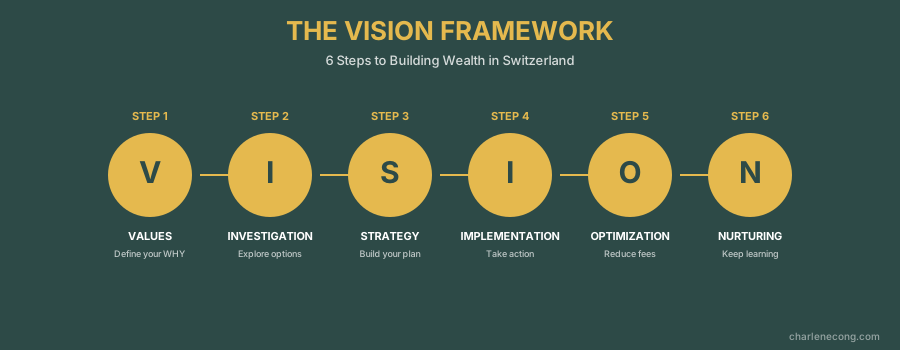
The VISION Framework: 6 Steps to Building Wealth in Switzerland
After 10 years in banking and investing (interviewing billionaires at Asian Private Banker, managing content for JPMorgan’s private banking clients, and building my own portfolio), I distilled everything into a simple framework anyone can follow.
VISION stands for: Values, Investigation, Strategy, Implementation, Optimization, and Nurturing.
Let’s walk through each step.
Step 1: Values. What Are You Actually Investing For?
This is where most people go wrong. They ask “What should I invest in?” before asking “Why am I investing at all?”
Your investment strategy should be as unique as your fingerprint. Someone who’s 35 and wants to retire in 10 years shouldn’t invest like someone who’s 40 and saving for a house in Zurich. Someone investing for their 1-year-old’s future shouldn’t copy a 55-year-old’s retirement plan.
Ask yourself:
- Why am I investing? (Freedom? Early retirement? Your children’s education?)
- What’s my timeline? (5 years? 10 years? 30 years?)
- What does financial success actually look like for me?
- How would my life change if I achieved it?

Don’t say “I want to get rich.” That’s too vague. Be specific: “I want CHF 1.5 million by age 50 so I can work part-time and spend summers traveling with my family.”
Here’s the uncomfortable truth: 99% of the investment advice you find online (on Reddit, YouTube, Swiss forums) won’t fit your life. It’s generic advice for generic people. But you’re not generic.
Investigation. What Investment Options Exist in Switzerland?
Now that you know your “why,” it’s time to explore the investment options available in Switzerland.
Most people stay in their comfort zone. They only know stocks, or they’ve only heard about crypto. But the investment options in Switzerland are much broader than that, and you need a holistic view before making smart decisions.
Good news: you don’t need to become a finance expert. You don’t need complex Excel models. What you need is awareness of what’s available.
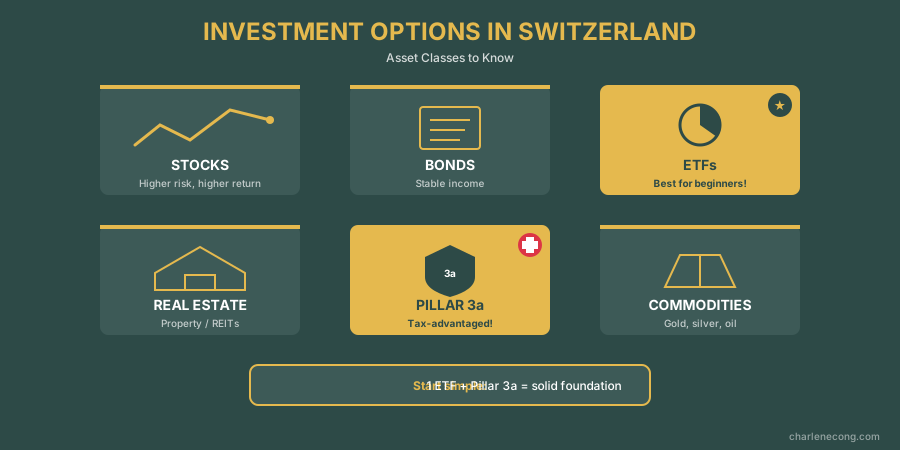
Main investment options in Switzerland, the asset classes to understand:
| Investment Option | What It Includes | Swiss Note |
|---|---|---|
| Stocks | Developed markets (DM) stocks, emerging markets (EM) stocks, dividend stocks, growth stocks, value stocks, small/large cap stocks. | Capital gains tax-free (private investors). |
| Bonds | Government bonds, corporate bonds, high-yield bonds, investment-grade bonds, short/long duration bonds. | Compared to stocks, lower risks, lower returns. |
| Precious Metals | Gold, silver (physical or ETF). | No income; crisis hedge. |
| Real Estate (Direct) | Physical residential/commercial property. | 20%+ down payment required in most cases. |
| Real Estate (REITs) | Listed property funds, global REIT ETFs. | More liquid than direct property. |
| Crypto | Bitcoin, Ethereum, altcoins and more. | High volatility; wealth tax applies. |
| ETFs | Exchange-traded funds tracking indices, sectors, commodities. | Low cost; check TER & fund size. |
| Index Funds | Passive funds tracking a market index (non-ETF structure). | Often slightly less liquid than ETFs. |
| Mutual Funds | Actively managed pooled funds. | Higher fees common in Switzerland. |
| Active Investing | Stock picking, market timing, tactical allocation. | Requires time, skill & discipline. |
| Passive Investing | Buy-and-hold index strategy. | Cost-efficient; long-term focus. |
| Pillar 3a | Tax-advantaged retirement account. | CHF 7,258 annual limit (employed). |
| Pillar 2 (BVG) | Occupational pension fund. | Check pension gap & buy-in potential. |
For beginners, the answer is often simpler than you think. I recently spoke with Raphael Mueller, a CFA charterholder and Director at one of the world’s largest asset management firms, and he put it perfectly:
“For a beginner, it can be a very basic ETF portfolio, even just one ETF. If you’re young, there’s nothing wrong with putting everything into a broad equity ETF like MSCI World or S&P 500. That’s a much, much better investment than putting all your eggs into one basket and just buying Apple or Tesla shares.”
The incremental move from not doing anything to doing something. That’s huge. If you’ve never invested and you start with one simple ETF, that’s a game changer
Where to invest: popular platforms in Switzerland
| Platform | Best For | Note |
|---|---|---|
| Swissquote | Swiss-based, broad access | Higher fees than int’l brokers |
| Interactive Brokers | Lowest fees, global access | Interface can be complex |
| Yuh | Beginners, mobile-first | Swiss-backed (Swissquote/PostFinance) |
| VIAC | Pillar 3a investing | Tax-advantaged retirement |
You don’t need to master all the investment options in Switzerland. But you should understand the pros and cons of each: What’s the cost? What’s the risk? How liquid is it? How much effort does it take to manage?
Step 3: Strategy. How Should You Allocate Your Money?
Now it’s time to build your investment strategy. This is where Steps 1 and 2 come together.
There’s no one-size-fits-all. Your strategy depends on your income, your timeline, and your risk tolerance, both emotionally and financially.
Example for higher risk tolerance:
- 40% US equities
- 25% European stocks
- 20% Asian markets
- 15% alternatives
Example for conservative approach:
- 60% stable markets (developed economies)
- 30% bonds or lower-risk assets
- 10% cash or money market
Keep it simple. You’re not building a hedge fund. You’re building a plan that works for your life. And once you build your strategy, stick to it. Markets will go up and down. That’s normal. But discipline wins. Not timing. Not hype. Not luck.
Step 4: Implementation. How to Make Your First Investment in Switzerland
This is where a lot of people freeze. They’ve done the research. They have a strategy. But they never make their first investment.
Don’t let that be you.
Making your first investment in Switzerland is simpler than you think. Implementation means taking action. Not tomorrow. Not “when the market is better.” Now.
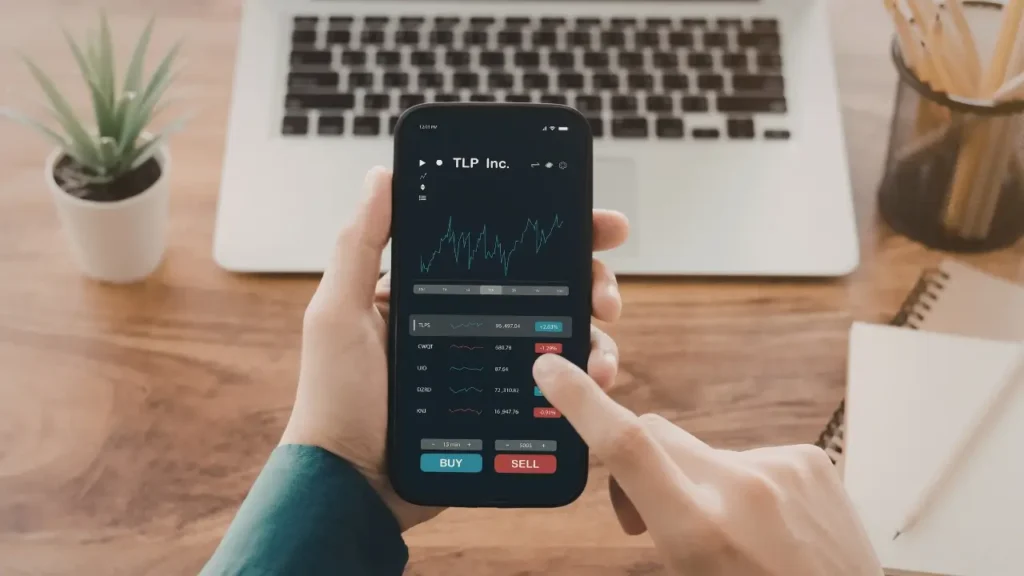
Here’s your action checklist for your first investment in Switzerland:
- Open your investment account (pick one platform from the table above)
- Complete the verification process (usually 1-3 business days)
- Fund your account with your first deposit
- Buy your first ETF or fund
You don’t need to go all-in on Day 1. Even CHF 100 is enough to start. I started with just $500.
The secret? Make it boring. Raphael shared something that really stuck with me:
“Every month I make just two trades. My salary comes in, a part goes directly to my investment account, and I buy. It’s like brushing my teeth, I don’t even think about it. I’m not trying to time the market. I just do it on the day it comes. It’s become such a routine that I don’t even think about it anymore.”
This is the goal: remove the emotions, remove the decisions, automate the process Set up a monthly transfer. Set up auto-investments if your platform allows it. The less you need to think about it, the more consistent you’ll be.
Step 5: Optimization. Reduce Fees and Maximize Tax Benefits
You’ve started investing money in Switzerland. Now let’s optimize.
First, look at your fees:
- Management fees (TER for ETFs, aim for under 0.3%)
- Transaction fees (varies by broker)
- Currency conversion fees (often hidden!)
Even a 1% difference in fees can cost you tens of thousands of francs over 20-30 years.
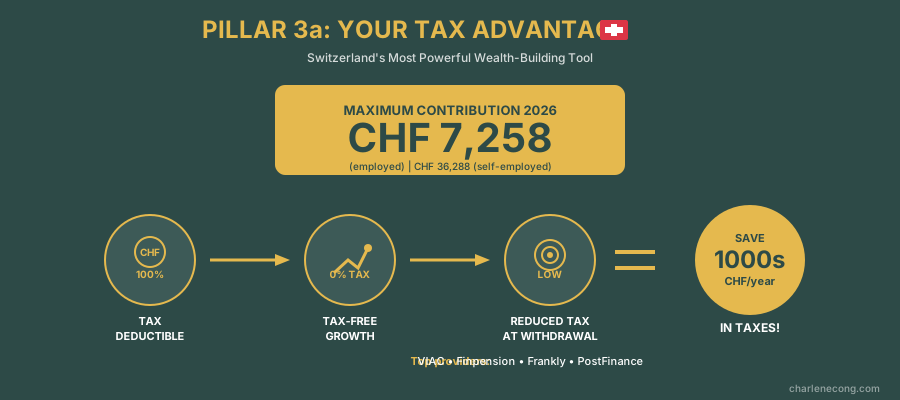
Second, maximize Swiss tax efficiency:
- Pillar 3a: Contribute up to CHF 7,258 (2026) and deduct it from taxable income
- DA-1 form: Reclaim withholding taxes on foreign dividends
- Accumulating ETFs: Automatically reinvest dividends, potentially reducing tax burden
But here’s my warning: some of my friends become obsessed with optimization. They compare every platform, every fee, every tax detail. Some know more than me about which ETF has the lowest TER.
Yes, optimization matters. But building a strategy that fits your life matters more. Start with strategy. Then optimize, not the other way around.
Step 6: Nurturing. Continue to Learn Investing in Switzerland
Wealth-building isn’t a one-time setup. It’s a long-term journey where you continuously learn about investing in Switzerland and adapt to changes.
The financial world is constantly evolving. AI is changing how we invest. ESG factors are shifting where money flows. New investment options in Switzerland emerge every year, from new Pillar 3a providers to lower-cost ETFs.
You don’t need to know everything. But stay curious. Review your portfolio periodically. Not daily (that leads to anxiety and overtrading), but quarterly or annually.
Even Experts Make Mistakes: A Lesson in Risk
I want to share something important that Raphael told me, because it’s a lesson we all need to hear:
“I once invested in a startup where I was also working. The startup didn’t work out, and I lost all my money. It made it very real what it means to take company-specific risk. I was hoping for a successful exit that would multiply my money, but unfortunately, it didn’t happen.”
This is a CFA charterholder with 15+ years of experience at top financial institutions. And he still made this mistake.
The lesson? Diversification isn’t just advice. It’s protection. Don’t put all your eggs in one basket, whether that’s a single stock, a single startup, or a single asset class. The broad ETF approach we talked about earlier? That’s exactly why it works. You’re spreading risk across thousands of companies instead of betting everything on one.
Ready to Learn Investing in Switzerland the Right Way?
If you’re ready to dive deeper into investing money in Switzerland, I’d love to invite you to my free live investment masterclass.
In this 90-minute workshop, I’ll show you exactly how I built a 7-figure investment portfolio and how you can do it too, step by step.
You’ll learn:
- The exact framework I used to retire at 32
- All the investment options in Switzerland explained simply
- Swiss-specific tax optimization strategies
- How to make your first investment in Switzerland with confidence
Spots are limited → Register for the Free Masterclass
Already know you want a structured program? Check out my investing course in Switzerland.
Frequently Asked Questions About Investing in Switzerland
Where should I invest my money in Switzerland?
For beginners investing money in Switzerland, start with a broad market ETF like MSCI World or a total world ETF (VT, VWRL). These give you instant diversification across thousands of companies with low fees. Also consider Pillar 3a accounts (VIAC, Finpension, Frankly) for tax-advantaged retirement investing. As you learn more, you can explore other investment options in Switzerland like individual stocks, bonds, or real estate funds.
Do I need an emergency fund before I start investing?
Yes, absolutely. An emergency fund of 3-6 months of living expenses is essential before you invest. Without it, if something unexpected happens (job loss, medical emergency, major repair), you might be forced to sell investments at a bad time, potentially at a loss. Your emergency fund is your financial safety net that protects your investments.
Should I pay off debt before investing?
It depends on the interest rate. If you have debt with interest rates above 6-7%, prioritize paying that off first. The stock market returns roughly 6-7% annually on average, so paying 15% interest while earning 7% means you’re losing money overall. Low-interest debt under 4-5% can coexist with investing.
How much money do I need for my first investment in Switzerland?
You can make your first investment in Switzerland with as little as CHF 100. Many platforms like Yuh have no minimum investment. I started my investment journey with just $500. The most important thing is to start, the amount can grow over time. Even small, consistent investments compound significantly over decades.
What are the best investment options in Switzerland for beginners?
The best investment options in Switzerland for beginners are broad market ETFs and Pillar 3a accounts. ETFs like MSCI World or S&P 500 trackers provide instant diversification with low fees. Pillar 3a accounts (through providers like VIAC, Finpension, or Frankly) offer tax-deductible contributions and tax-free growth. Together, these two investment options in Switzerland form a solid foundation.
How often should I trade or check my investments?
For long-term investors, less is more. Many successful investors make just 1-2 trades per month, buying consistently on the same day their salary arrives. Checking daily leads to anxiety and overtrading. Review quarterly or annually to rebalance if needed, but otherwise let your investments compound.
How is investment income taxed in Switzerland?
In Switzerland, capital gains from private investments are generally tax-free. However, dividends are taxed as income. Swiss dividends face 35% withholding tax (reclaimable via tax return), while foreign dividends face 15-30% (partially reclaimable via DA-1 form). Pillar 3a contributions are fully tax-deductible.
What is Pillar 3a and why should I use it?
Pillar 3a is Switzerland’s private pension scheme with significant tax benefits. In 2026, employed individuals can contribute up to CHF 7,258 and deduct this from taxable income. Providers like VIAC, Finpension, and Frankly offer investment options within Pillar 3a. It’s one of the most powerful wealth-building tools for Swiss residents.
What’s the best way to learn investing in Switzerland?
The best way to learn investing in Switzerland is to start with the basics and take action. Read beginner-friendly guides (like this one), follow Swiss-focused financial education content, and make your first small investment to learn by doing. Avoid getting stuck in “analysis paralysis”, even a CHF 100 investment teaches you more than months of reading. Consider joining investment communities or taking a structured course to accelerate your learning.
Can expats invest in Switzerland?
Yes, expats can invest in Switzerland. Most Swiss brokers accept B and C permit holders. You can also use international platforms like Interactive Brokers. Expats with Swiss employment can contribute to Pillar 3a and benefit from tax deductions. Consider your residency timeline when planning. If you might relocate, this affects your long-term strategy.
Your Investment Journey Starts Today
Learning to invest in Switzerland isn’t complicated. But it does require intention, clarity, and action.
First, build your foundation: budget, emergency fund, high-interest debt paid off. Then follow the VISION framework: start with your values, investigate the investment options in Switzerland, build a strategy, make your first investment, optimize over time, and keep nurturing your knowledge.
I went from knowing nothing about finance to building a 7-figure portfolio and retiring at 32. Not because I was lucky or special, but because I followed a process. You can too.
Make investing money in Switzerland as automatic as brushing your teeth. Remove the emotions. Let the system work.
The hardest part? Taking the first step. Open that account. Make your first investment in Switzerland. You’re no longer just dreaming about wealth.
You’re building it.
Disclaimer: The information in this article is for educational purposes only and should not be construed as financial advice. All investments carry risk; past performance is not indicative of future results. This content does not account for your specific financial situation, needs, or objectives. Consult a qualified financial advisor before making investment decisions. Charlene Cong is a CFA charterholder providing educational content, not regulated financial services.

Charlene Cong, CFA, based in Zurich, Switzerland, is the founder of FinFit Solution and VISION Investment Academy. She is a seasoned Chartered Financial Analyst (CFA) with over a decade of experience in finance and banking across Asia and Europe.
Her career includes a notable tenure at JPMorgan and serving as an executive board member of the Swiss Capital Market Forum Association. She also has over seven years of experience as a banking journalist, where she investigated the investment strategies of high-net-worth individuals.